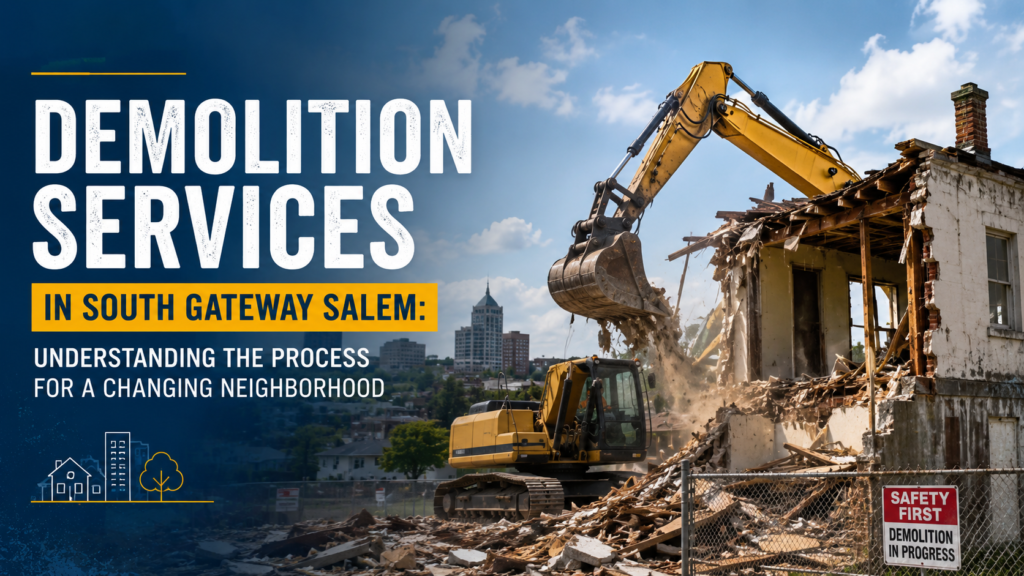
Sunnyslope is a residential neighborhood on the south side of Salem, Oregon, characterized by established single-family homes, quiet streets, and a community character that reflects decades of residential development. Like many established neighborhoods, Sunnyslope has properties ranging from well-maintained homes with decades of history to structures that have reached the end of their functional life and are candidates for demolition and replacement.
For homeowners and property investors in Sunnyslope considering a Demolition Contractor Sunnyslpe project, understanding the process, regulations, and best practices helps ensure that the work proceeds safely, legally, and efficiently.
When Does a Residential Property Need Demolition?
Not every old or deteriorated home requires demolition but some situations clearly call for it. Residential demolition in Sunnyslope is typically considered when:
- A structure has sustained severe damage from fire, flood, or other events that makes repair impractical or uneconomical
- A property owner wishes to replace an older, functionally obsolete home with a new structure better suited to current needs
- A structure has deteriorated to the point where the repair cost would significantly exceed the value gained
- A property is being cleared for infill development a growing trend in established Salem neighborhoods as urban density increases
- Secondary structures (old garages, storage buildings, barns) have become hazardous or are no longer needed
People Also Ask: Questions About Demolition Contractor Sunnyslope Services
What Are the Most Common Misconceptions About Residential Demolition?
Property owners considering demolition often hold misconceptions that can affect their planning:
- ‘Demolition is just knocking a building down’: In reality, professional demolition is a carefully planned and regulated process that includes hazardous material surveys and abatement, utility disconnections, permit acquisition, sorted debris disposal, and site preparation. The physical act of removing the structure is just one phase
- ‘I can demolish my own property however I want’: Demolition is regulated by building codes, environmental regulations, and local permit requirements regardless of property ownership. Unpermitted demolition can result in significant fines
- ‘All demolition contractors are the same’: The quality, compliance track record, equipment capability, and professionalism of demolition contractors varies significantly. Choosing based solely on price without evaluating these factors can lead to problems
- ‘Demolition is always faster than renovation’: For some projects, renovation is more cost-effective and time-efficient. For others, demolition and new construction is the better path. The right choice depends on the specific structure and circumstances
What Is the Difference Between Full Demolition and Deconstruction?
These two approaches to removing a structure differ significantly in method, timeline, cost, and environmental outcome:
- Full demolition: Using mechanical equipment (excavators) to rapidly dismantle the structure and collect debris for disposal or recycling. This approach is faster and typically less expensive but results in mixed debris that is harder to fully recycle
- Deconstruction: A manual process that systematically dismantles a structure to recover individual materials for reuse. This approach takes significantly longer and costs more in labor but recovers higher-quality salvageable materials doors, windows, cabinets, lumber, fixtures that can be reused, donated, or sold
Oregon has supported deconstruction as an environmentally preferred alternative to full demolition, and some municipalities have explored deconstruction requirements for residential demolition. For Sunnyslope homeowners considering a teardown, deconstruction is worth evaluating if the structure contains high-quality salvageable materials and if the environmental benefit of material recovery is important to them.
How Long Does Residential Demolition Take?
The timeline for a residential demolition project in Sunnyslope depends on several factors:
- Permitting: The permit application and review process typically takes one to four weeks, depending on the jurisdiction’s workload and whether any issues arise
- Asbestos and hazardous material survey: Typically takes one to two weeks to complete, with additional time required if abatement is needed
- Utility disconnections: Coordination with water, sewer, gas, and electrical utilities can take one to three weeks
- Actual demolition: For a standard single-family home, mechanical demolition and initial site clearing can often be completed in one to three days
- Debris hauling and site grading: An additional one to three days depending on the volume of material and site conditions
From the decision to proceed with demolition to a cleared site ready for new construction, property owners in Sunnyslope should typically plan for four to eight weeks, with much of that time consumed by pre-demolition regulatory requirements rather than the physical work itself.
How Should Neighboring Properties Be Protected During Demolition?
Residential demolition in an established neighborhood like Sunnyslope requires care to protect neighboring properties and residents. Standard protective measures include:
- Dust control: Wetting down debris during demolition to suppress dust, which can be a nuisance and health concern for neighbors
- Debris containment: Ensuring that demolition debris does not cross property lines or damage neighboring landscaping, structures, or vehicles
- Noise management: Scheduling noisy demolition operations during reasonable hours and communicating the schedule to neighbors in advance
- Tree protection: Fencing off any significant trees near the work area to prevent equipment from damaging roots or trunks
- Erosion control: Preventing sediment from the cleared site from running onto neighboring properties or into storm drains
Communicating proactively with neighbors before demolition begins, and ensuring that the demolition contractor implements appropriate protective measures, helps maintain good relationships in the community and reduces the risk of disputes or complaints.